

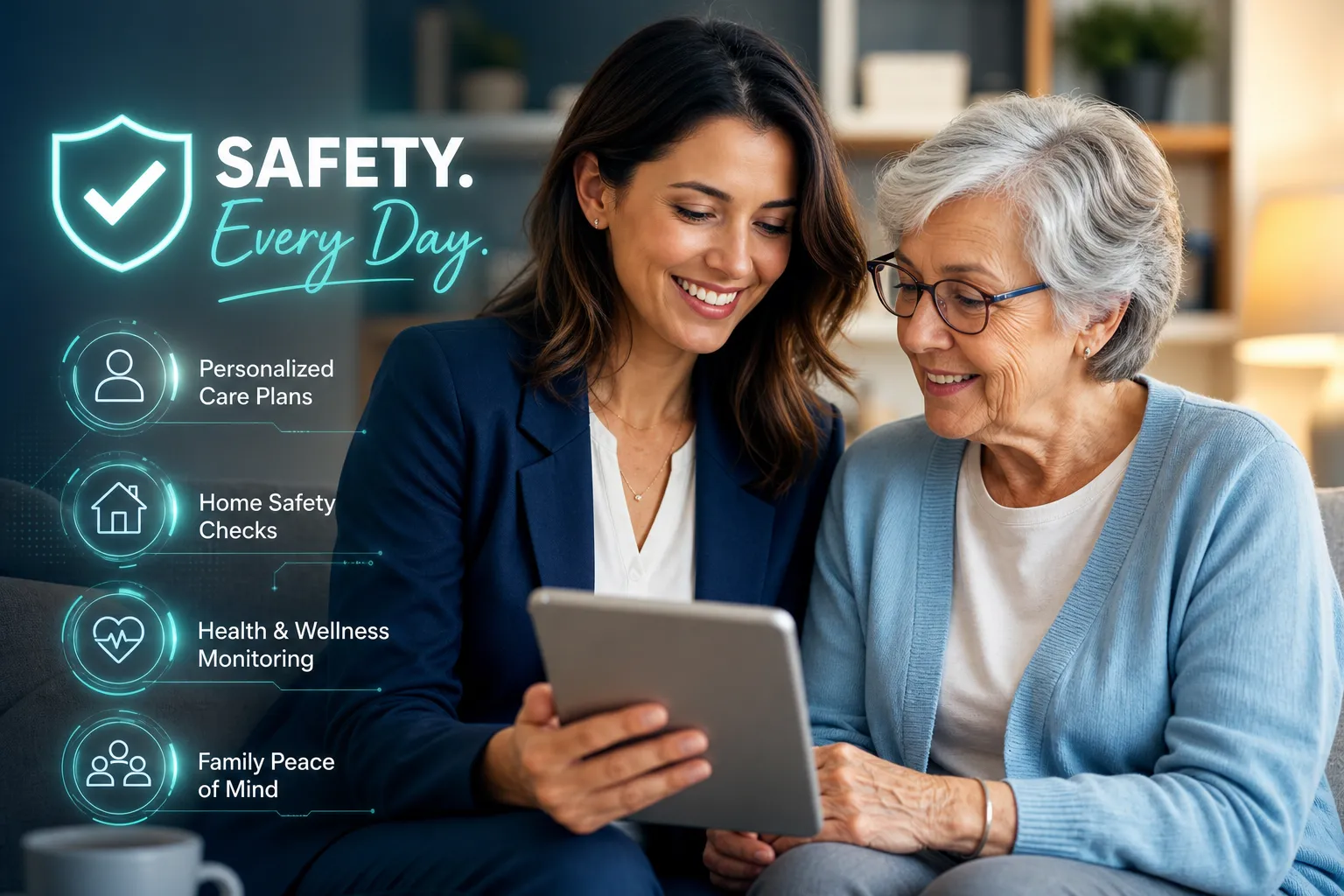
Most families searching for home care assume the process is fairly straightforward: find a reputable agency, hire a caregiver, and let the visits begin. That assumption is understandable, and it is also one of the most consequential gaps in how families evaluate care options for aging parents. Asking whether a home care case manager will oversee the plan is the question that separates genuine clinical oversight from basic caregiver placement. For seniors managing chronic illness, recovering from surgery, or navigating a recent hospital discharge, that distinction can meaningfully reduce the risk of a preventable return to the emergency room.
At Avodah Home Care in South Carolina, a registered nurse case manager sits at the center of every care plan from day one, a structural choice the agency states is foundational to its model. That approach is not a marketing differentiator. It is the clinical infrastructure that contributes to improved safety and reduced readmission risk for seniors with complex needs. This article explains exactly what a home care case manager does, why the absence of that role creates real risk, what the clinical evidence shows about nurse-led oversight, and how to ask the right questions before choosing an agency for your parent.
What a home care case manager actually does
The role is frequently misunderstood, even by families who have hired home care before. A home care case manager is not an administrative coordinator who manages scheduling. The role is a clinical function: a licensed professional who assesses a client’s medical history, functional limitations, psychosocial needs, home environment hazards, and existing caregiver support gaps before a single care visit takes place. That structured assessment determines which services are needed, in what sequence, and at what frequency. It is the foundation the entire care plan is built on.
The assessment that comes before any care plan
A home health case manager does not begin with a task list. The work begins with a comprehensive clinical picture. That means reviewing diagnoses and medications, evaluating how safely a client moves through their home, identifying cognitive changes that caregivers may not recognize, and spotting the environmental risks that turn a routine Tuesday into a fall injury. Standardized assessment frameworks, such as the OASIS tool used in Medicare home health, ensure this process is thorough and documented, not informal or assumption-based. The care plan that follows is shaped by clinical evidence, not guesswork.
Coordination across the full care team
Once a plan is in place, the case manager becomes the central connector between the client, the family, the primary care physician, any specialists involved, therapists, and community resources. This is active coordination, not passive scheduling. When a cardiologist changes a medication dosage, the case manager makes sure the caregiver and the family both understand the implications. When a physical therapist identifies a fall risk in the bathroom, the case manager ensures that concern reaches the physician and gets documented in the care plan.
Advocacy as a clinical function
When a client’s condition shifts, whether gradually or suddenly, the case manager advocates directly for plan adjustments with physicians and, when necessary, with insurance payers. This advocacy function requires clinical credibility. Home health nurse case managers typically hold an active RN license, with many pursuing board certifications such as the CCM (Certified Case Manager) through the Commission for Case Manager Certification or the CMGT-BC credential through the American Nurses Credentialing Center. Both are recognized credentials that indicate additional case-management training beyond baseline licensure; many employers prefer or require an RN license for clinical case-manager roles. These designations signal that the person managing your parent’s care has met a verifiable clinical standard, not just an employment requirement.
The gap between case management and basic caregiver placement
Understanding what a nurse case manager does makes it much easier to see what is missing when an agency operates without one. Caregiver-only agencies place trained aides who complete assigned tasks: bathing, grooming, meal preparation, medication reminders, and companionship. Those services have genuine value. But there is no clinical layer reviewing whether those tasks are still appropriate, whether the client’s condition has quietly shifted, or whether something a caregiver observed last Tuesday should have reached a physician by Thursday.
What scheduling-only agencies provide
In a scheduling-only model, a caregiver shows up, completes the assigned visit, logs the time, and leaves. No one is watching the broader clinical picture between those visits. If a client’s appetite changes, their mobility declines, or they start showing confusion at a time of day they didn’t before, that information may get noted in a visit log. Whether it reaches anyone with the clinical authority to act on it is a different question entirely. In some agencies, visit logs may not routinely trigger clinical review, families should ask directly how such information is escalated.
What a home care case manager adds to that picture
A home care case manager reviews clinical data systematically, monitors for early warning signs across visits, adjusts the care plan when conditions evolve, and communicates meaningful changes to the medical team. This oversight layer can reduce the likelihood that a subtle clinical decline becomes an unplanned hospitalization. The caregiver sees the daily picture. The nurse case manager sees the clinical trend across weeks and months. Both matter, but only one has the authority and training to act on what they observe.
The question that reveals everything
Families who don’t know this gap exists often discover it only after something goes wrong. Before signing an agreement with any agency, ask one direct question: “Who holds the nursing license on my parent’s care team?” If the answer is the caregiver or the scheduling coordinator, there is no case management function in place. To get a complete picture, also ask who performs clinical assessments and who updates the care plan when conditions change. A home care case manager is a clinical role with defined responsibilities and professional accountability. Families deserve to know whether that role exists before care begins.
How a home care case manager reduces hospital readmissions
The clinical stakes here are measurable. The Centers for Medicare and Medicaid Services reports that historically about one in five patients discharged from a hospital is readmitted within 30 days. For seniors with heart failure, COPD, diabetes, or dementia, that window is particularly dangerous. A growing body of evidence consistently points to nurse-led care coordination during the transition from hospital to home as one of the most effective tools for reducing that risk.
Catching warning signs between physician visits
A home care case manager observes and documents clinical signals that might not surface during a quarterly physician appointment: subtle weight shifts that indicate fluid retention, cognitive changes that suggest medication side effects, wound status that is quietly deteriorating, or functional regression that signals a worsening underlying condition. Caught early, these signals create the opportunity for outpatient intervention rather than emergency hospitalization. The evidence supports this: a meta-analysis of nurse-led transitional care interventions found that when follow-up extended at least 12 weeks, hospital readmissions were reduced by approximately 33 percent. A separate systematic review of 42 randomized trials found that structured interventions designed to prevent early readmissions reduced 30-day readmission risk by approximately 18 percent overall (relative risk 0.82, 95% CI 0.73, 0.91).
Managing the hospital-to-home transition with a clinical eye
The 30 days following a hospital discharge represent the highest-risk window for older adults. Discharge instructions that seem clear in a hospital room often become confusing once a senior is home alone or with a well-meaning but medically untrained family member. A nurse-led care coordinator bridges that gap directly: reconciling medications against what the client was actually taking before hospitalization, confirming that follow-up appointments are scheduled and reachable, and identifying whether the home environment itself has become a hazard.
Research estimates that approximately 27 percent of hospital readmissions are potentially preventable with better post-discharge care coordination, including home care follow-up. That is not a marginal statistic. For a family whose parent is recovering from a hip replacement or a cardiac event, it represents real, preventable harm.
Chronic condition monitoring as an ongoing safety net
For seniors managing heart failure, COPD, diabetes, or dementia, one discharge plan is not enough. A home care case manager monitors compliance and clinical stability continuously across the care relationship, not just in the first week after a hospital stay. This ongoing reassessment is not a one-time service. It is the mechanism that keeps a complex senior stable at home over months and years, adjusting the care plan as their condition changes and advocating for additional services when the existing plan is no longer sufficient.
How Avodah Home Care’s nurse-led model works in practice
Avodah Home Care was built around a nurse-led case management model because the founders understood that coordinating caregivers without clinical oversight leaves families exposed in ways they often cannot anticipate. Avodah states that every care relationship begins with a registered nurse assessment, not an intake form completed by a scheduler. The RN develops the care plan, monitors client status across visits, and adjusts the plan as conditions evolve. The caregiver carries out the plan. The nurse oversees it. Those are distinct roles, and both matter.
Courtesy calls and hands-on oversight as standard practice
Avodah reports that its model includes regular courtesy check-ins with families, not just caregiver visits logged in a system. This accountability loop is what transforms home care from a service families hope is working into one they can verify is working. An adult child managing a parent’s care from across town, or across the state, does not have to wait for something to go wrong to find out whether the care plan is still appropriate. Proactive communication with families is a structural feature of the model, built into how clinical oversight operates day to day rather than triggered only by a problem.
24/7 availability and VA network participation
Avodah Home Care states that it operates 24 hours a day, 365 days a year across South Carolina, which means a clinical resource is reachable when something changes at 2 a.m. on a Saturday. As an approved provider in the VA Community Care Network, Avodah’s nurse-led case management standards also extend to eligible veterans and their beneficiaries throughout the state, including areas where access to coordinated home care can be limited. Families who qualify for VA benefits and want to know whether an agency can support the eligibility and enrollment process should ask specifically about VA network participation and documentation practices.
What informed families should ask before choosing a home care agency
Choosing a home care agency is not primarily a logistics decision. It is a clinical one, even when it doesn’t feel like it. The right questions reveal whether an agency operates as a genuine care partner or as a staffing service that places caregivers and steps back.
Questions that reveal the clinical depth of an agency
- Does a registered nurse assess my parent before the first caregiver visit, or does the care plan come from a non-clinical intake process?
- Who updates the care plan when my parent’s condition changes, and what is their clinical credential?
- How does the agency communicate with my parent’s primary care physician when something clinically significant is observed?
The answers to those three questions tell you more about an agency’s clinical infrastructure than any marketing brochure will. An agency with genuine nurse-led case management will answer each one specifically. An agency operating as a staffing service will be vague, redirect to caregiver qualifications, or describe communication that flows through a scheduling coordinator rather than a licensed clinician.
The one question that separates care partners from staffing services
Ask this directly: “What happens if my parent falls on a Thursday night at 11 p.m.?” The answer tells you whether clinical oversight is a real operational feature or a marketing claim. A nurse-led agency will describe a specific protocol that involves a clinical decision-maker. An agency without that infrastructure will describe how the caregiver will call 911, which is a fine answer for an emergency, but says nothing about whether anyone was watching for the fall risk in the first place.
The home care case manager role that makes aging in place safe
Nurse-led home care case management is not a premium upgrade families can add when their parent’s condition worsens. For seniors with complex medical histories, chronic conditions, or recent hospitalizations, it is the foundational clinical structure that determines whether aging in place is genuinely viable. Families who understand this distinction choose agencies built around it from the start, before something goes wrong and the absence of clinical oversight becomes obvious.
If your parent is recovering from a hospitalization, managing a chronic condition at home, or reaching a point where daily living requires consistent support, the first conversation should be about what clinical oversight looks like, not just what the caregiver schedule looks like. Families ready to ask those questions can start that conversation with Avodah Home Care directly. What a home care case manager actually does, and what that means for your parent’s specific situation, is exactly where that conversation begins.

- Senior Care in Columbia SC: Options, Costs & How to Choose - August 28, 2026
- Home Care vs. Assisted Living: What Families Must Know - August 28, 2026
- Dementia Care at Home: A Complete Guide for Families - August 18, 2026